
Our Ancestors and the Making of a Nation
As I researched the lives of my grandparents and those of their ancestors, I began to realize that their stories weren’t just a collection of names and dates and isolated events.
Each one was connected to something much larger — the settlement of new lands, the founding of a new country, and the exploration, infrastructure, and industries that helped it grow. But their stories also brush up against the harder chapters of that history: the displacement of Native Americans, the institution of slavery, and the ravages of widespread disease. Their lives, in ways large and small, were part of the story of the United States itself.
Family history isn’t just the story of our ancestors; it’s the story of places, migrations, and events that shaped their lives. Our family history is intertwined with the larger history of America’s founding, growth, and development.
Colonial Roots
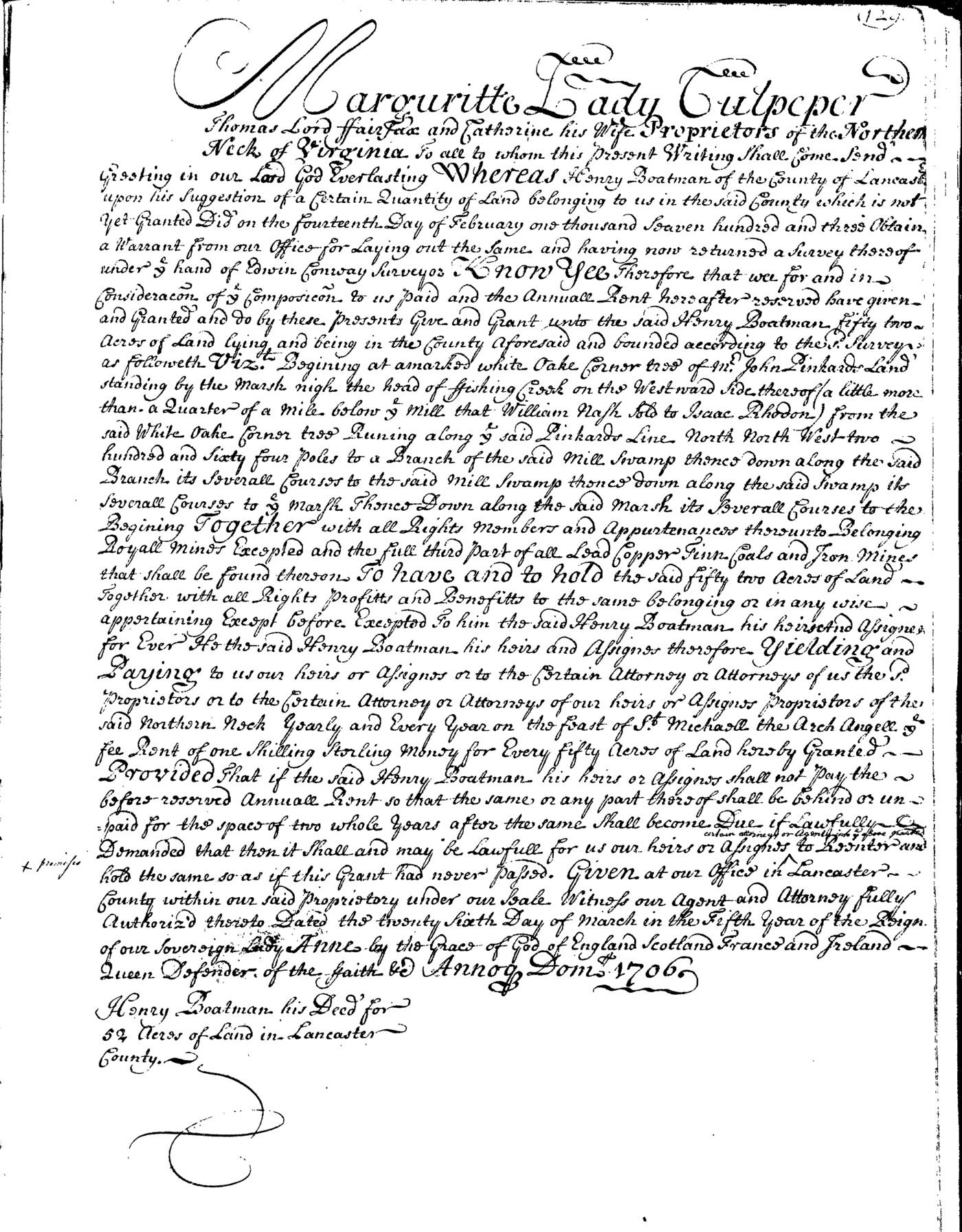
The first of our Boatman ancestors arrived in Virginia sometime in the late 1600s It was so exciting to find images of actual land grant documents — including one from 1706 — granting land to our Boatman ancestor. That Boatman ancestor was my 9th great-grandfather and so eleven generations removed from me. His descendants appear to have married women whose families had also settled in Colonial Virginia. I can’t take credit for much of this early research (more on that later) but I am busy trying to find documentation to verify it.
The first of our Mashaw ancestors probably were not actually “colonists” but came from France, arriving in South Carolina not long after the Revolutionary War. This line is proving to be rather difficult to trace. Mashaw is clearly an anglicized version of the original and I have spent many hours trying to find out whether that was Micheaux, Michaud, Michout, or some variation of one of those. Muriel Mashaw’s maternal ancestors have been far easier to research and I have discovered that they arrived in the British colonies of Maryland, Virginia, and what is now referred to as North Carolina.
Independence and Westward Expansion
While I haven’t discovered any “famous” ancestors, I have found documentation showing that some of these Colonial ancestors lived in the same vicinity or served in the House of Burgesses with George Washington and evidence that some had relatives who married into the Jefferson family. The colonies were fairly small worlds and many no doubt socialized with other families with similarly illustrious names. It seems they shared those men’s convictions as many of them are known to have fought for the freedom of those colonies in the Revolutionary War and in the War of 1812.
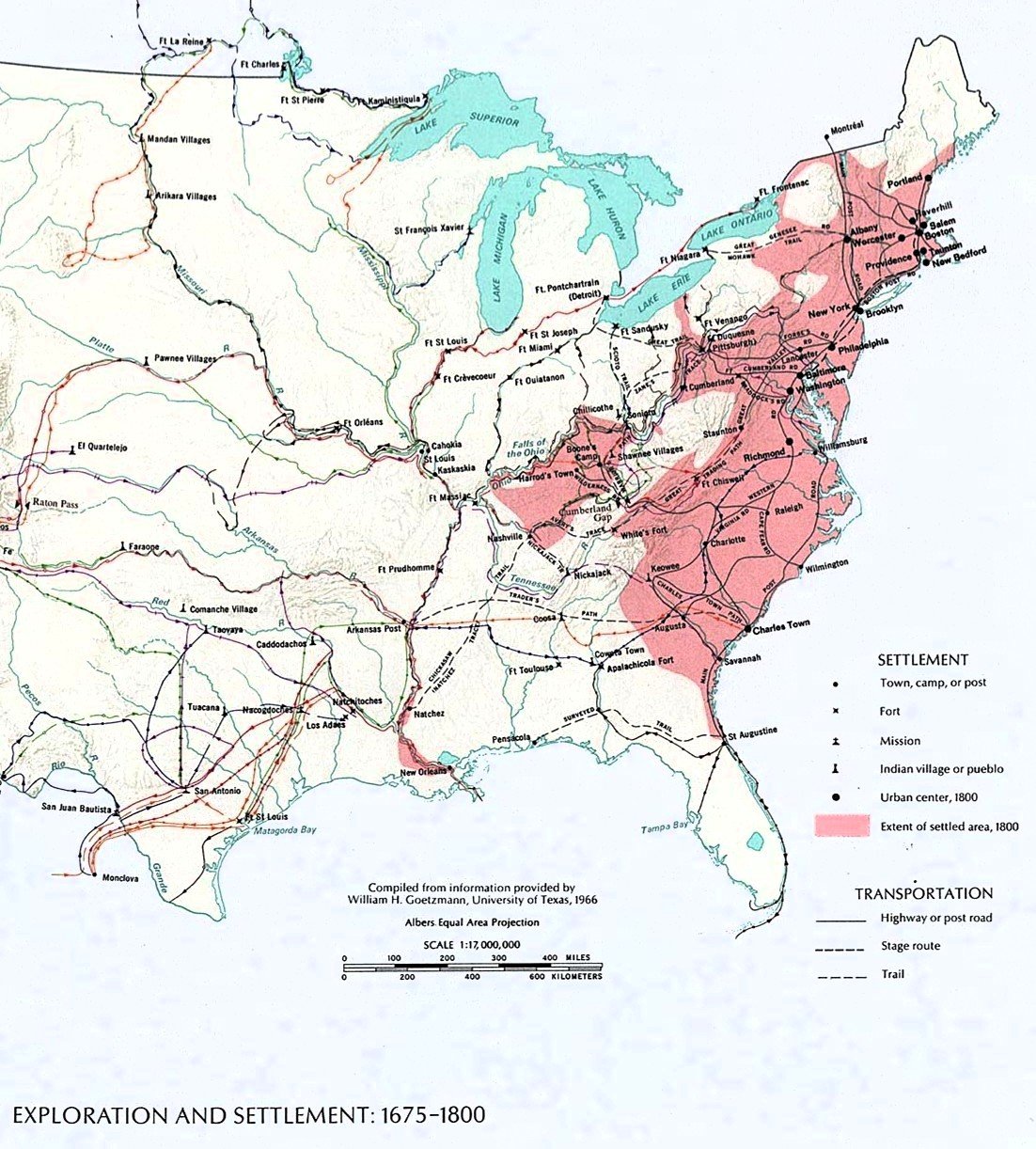
Their descendants continued to carry that pioneering spirit, moving progressively further west, generation by generation, as the frontier expanded. The realities of this migration began to feel vivid to me when I realized that many of them were crossing the mountains of Virginia during the same era as — and sometimes on the same routes as — Daniel Boone and David Crockett.
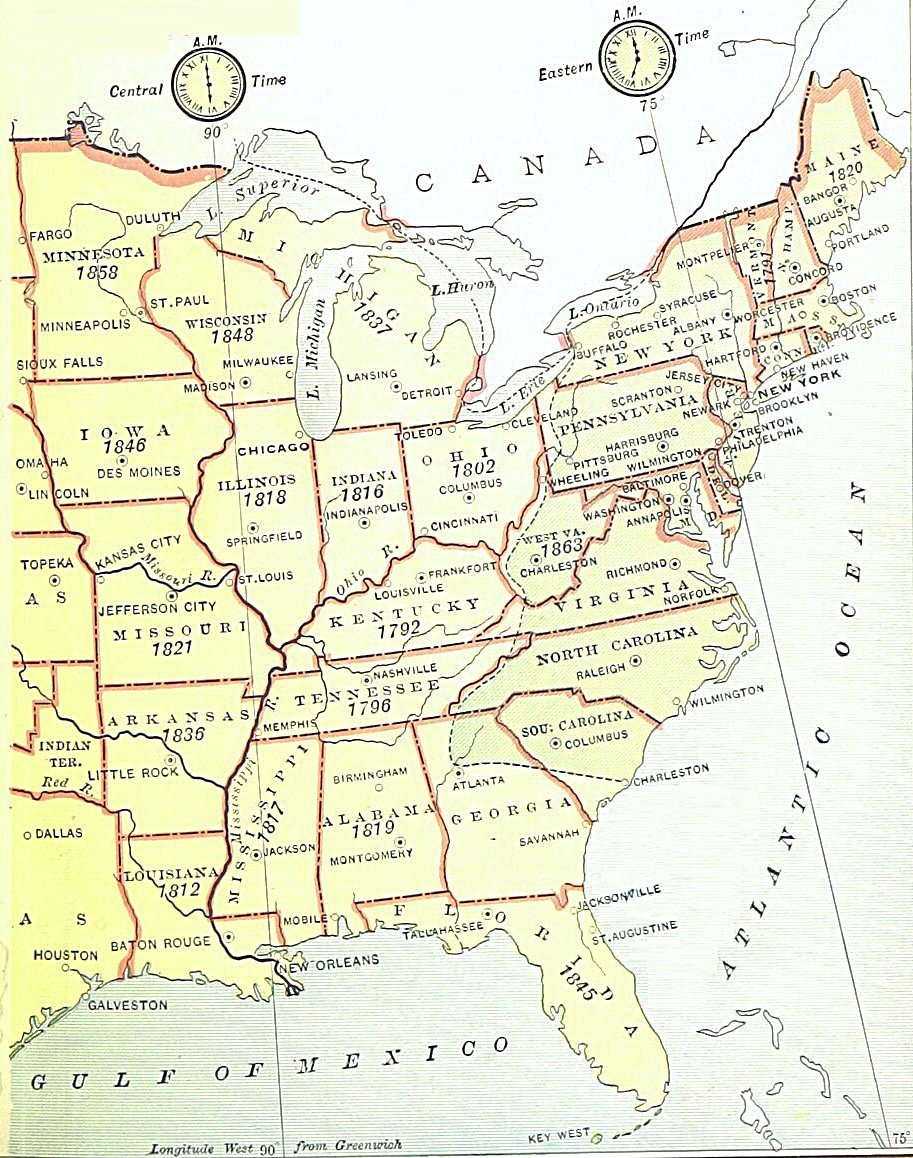
The Boatman line had put down roots on Virginia’s Northern Neck before pushing west into Kentucky by the early 1800s. By the 1860s they had continued on to Illinois, a move shaped in part by which side of the Civil War they wanted to be on. The Mashaws spread in a different direction, fanning out across the Deep South and eventually into Texas, Indian Territory, and beyond — with descendants eventually reaching Arizona and California. Muriel Mashaw’s maternal ancestors made their own winding journey through Missouri and Arkansas before settling in what would become southeastern Oklahoma, though some continued south into the Republic of Texas.
Most were farmers, but these generations produced more than their share of characters: Methodist ministers, Baptist preachers, small hotel and restaurant keepers, loggers, railroad workers, and at least a few who tried their luck mining for silver and panning for gold.
The Beginnings of the Irish Diaspora
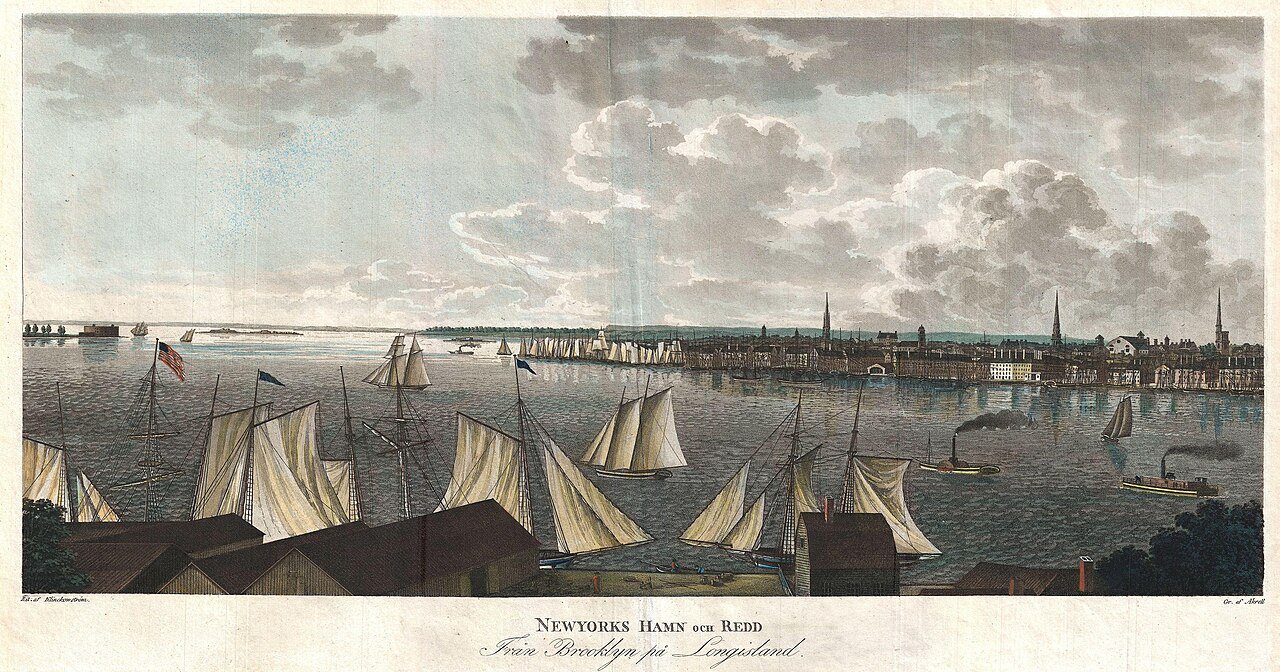
While two branches of my family were pushing west in the 1800s, another branch began making its own way to the U.S. shores. All of our American ancestors on the Carroll side were Irish immigrants who came to the U.S. in the 1820s and 1830s, well ahead of the potato-famine wave of immigration. Arriving before there were any immigration laws, some came via Canada while others simply stepped off a ship into New York City.
I have found it very hard to trace most of these ancestors back to their homes in Ireland as, when asked for their place of origin, they almost invariably simply provided “Ireland” as an answer, an answer I find highly frustrating. Regardless, their lives in North America are quite interesting. Once in this country, these ancestors did not fit into the category of “laborer” as so many of their fellow countrymen who arrived only a few decades later.
These Irish ancestors would soon become successful merchants and businessmen in both New York City and Paterson, New Jersey, which was founded by Alexander Hamilton in 1792 as the country’s first planned industrial city. Notably, many members of these families were active in the established presence of the Catholic Church in both of these cities, and were relatives and friends with prominent Catholic clergymen.
Eastern European Immigration
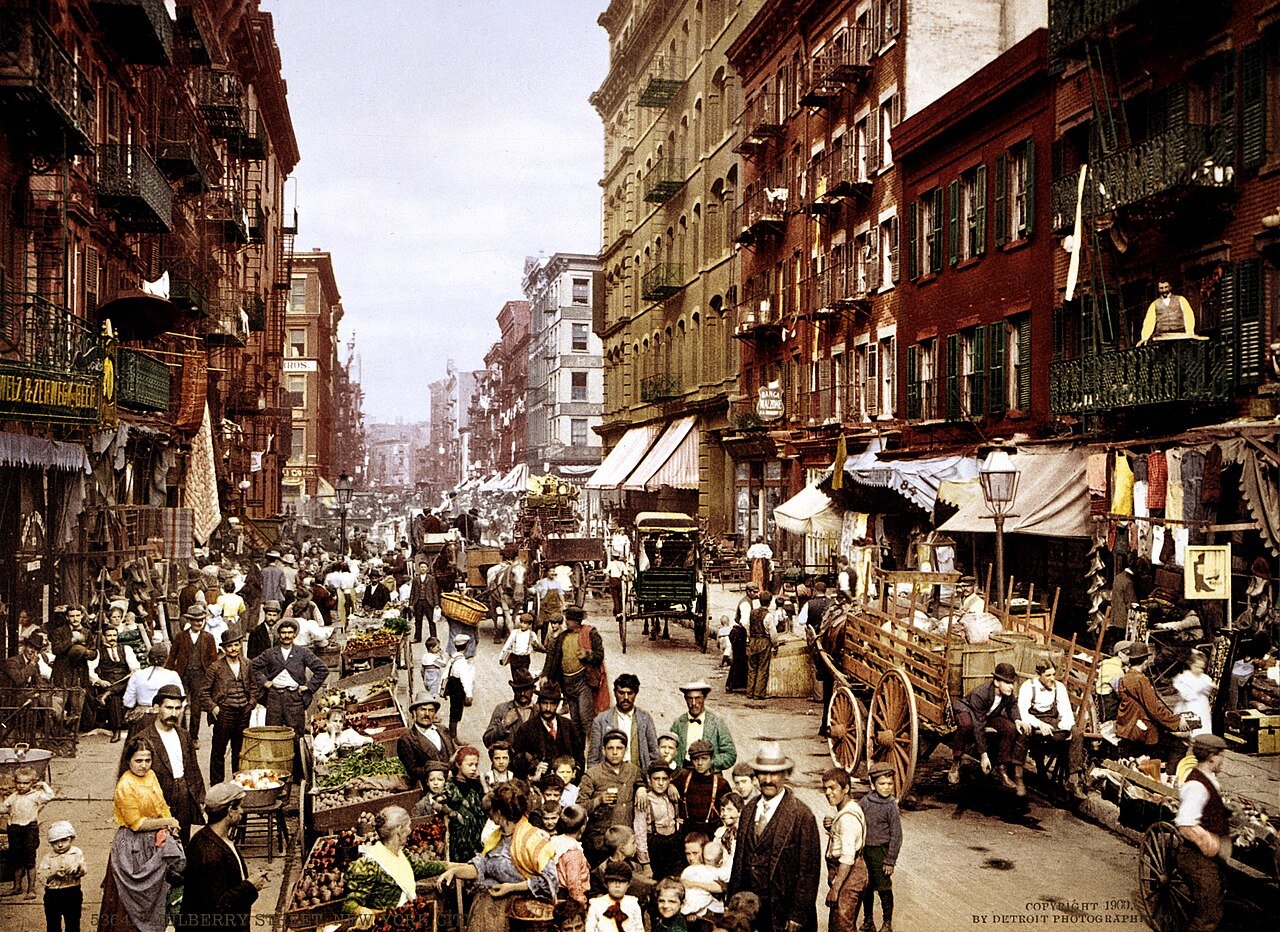
Our Umaceny ancestors were the last to arrive in the United States, entering New York City through the Castle Garden immigration port in the 1850s. (Ellis Island was not created until 1892.)
These Czech ancestors had left their homeland of Bohemia, part of the oppressive Austro-Hungarian empire, in search of the freedoms enjoyed by those in the U.S.
Unlike their Irish counterparts who simply wrote ‘Ireland,’ some of these ancestors listed specific towns in church records — pointing me to the thread I needed to unravel their Bohemian history. The surname Umaceny is rather unique both in the US and in Czechia. This made finding that thread much easier. Once I found that first record, imagine how excited I was to discover that Czech records are detailed enough to follow their family lines back many generations further — to the very villages they came from. It hasn’t been without its challenges: the records are handwritten in centuries-old script, and many of the village names have changed multiple times as controlling governments came and went. But my perseverance paid off, and I’ve even had the opportunity to visit some of those villages myself.
As thrilling as it is for me to trace them back through those records, it’s hard to say if their daily lives were actually better once they arrived. They settled in the tenements of lower Manhattan in a time when this area was the most densely packed neighborhood in American history, joining their fellow countrymen and women making cigars in what was then a home-based industry. Photos from that era show streets so crowded you could barely see the pavement, and apartments shared by more families than rooms.
While their working lives, living conditions, and surroundings seem to have been no better than what they’d left behind, they had something they’d never had before – the power over their own lives to live as they wanted and to change their “station in life.” These families progressively improved their lives, finding their way to better employment, allowing them to first move further up-town and then to the new suburbs of The Bronx and Brooklyn, with branches of their descendants later moving to Long Island and Connecticut.
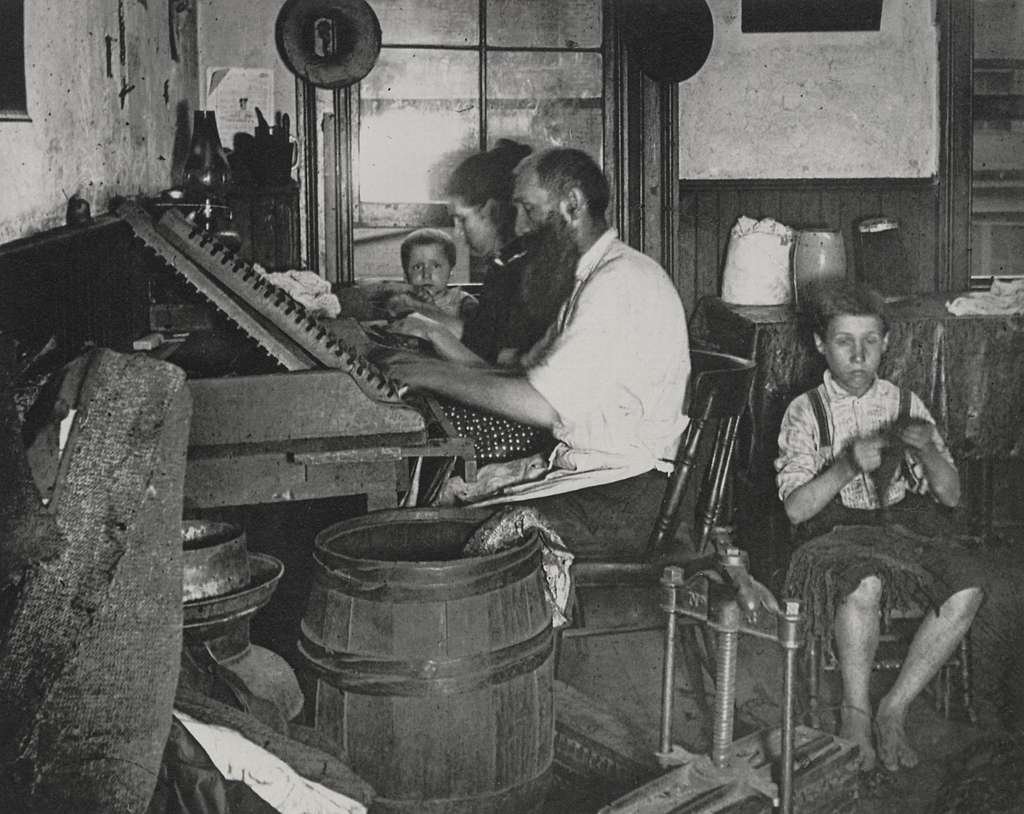
Whether they were British Colonists turned American pioneers, Irish merchants building new lives in New York and New Jersey, or Czech immigrants crowding into Manhattan tenements — whether they arrived in the 17th, 18th, or 19th century — our ancestors shared something important. They had the courage to leave what was familiar and venture into the unknown in search of a better future, knowing that doing so would involve great challenges, possible danger, and, most certainly, hard work. And every journey they undertook, every risk they accepted, and every hardship they endured became part of the story that eventually led to us.
In future posts, I’ll follow some of these routes in greater detail — exploring the lives of individual ancestors and the worlds they inhabited, while also sharing the discoveries, large and small, that brought their stories to light. The larger picture provides the backdrop; it is the people themselves — their choices, struggles, successes, and failures — who bring that picture to life.